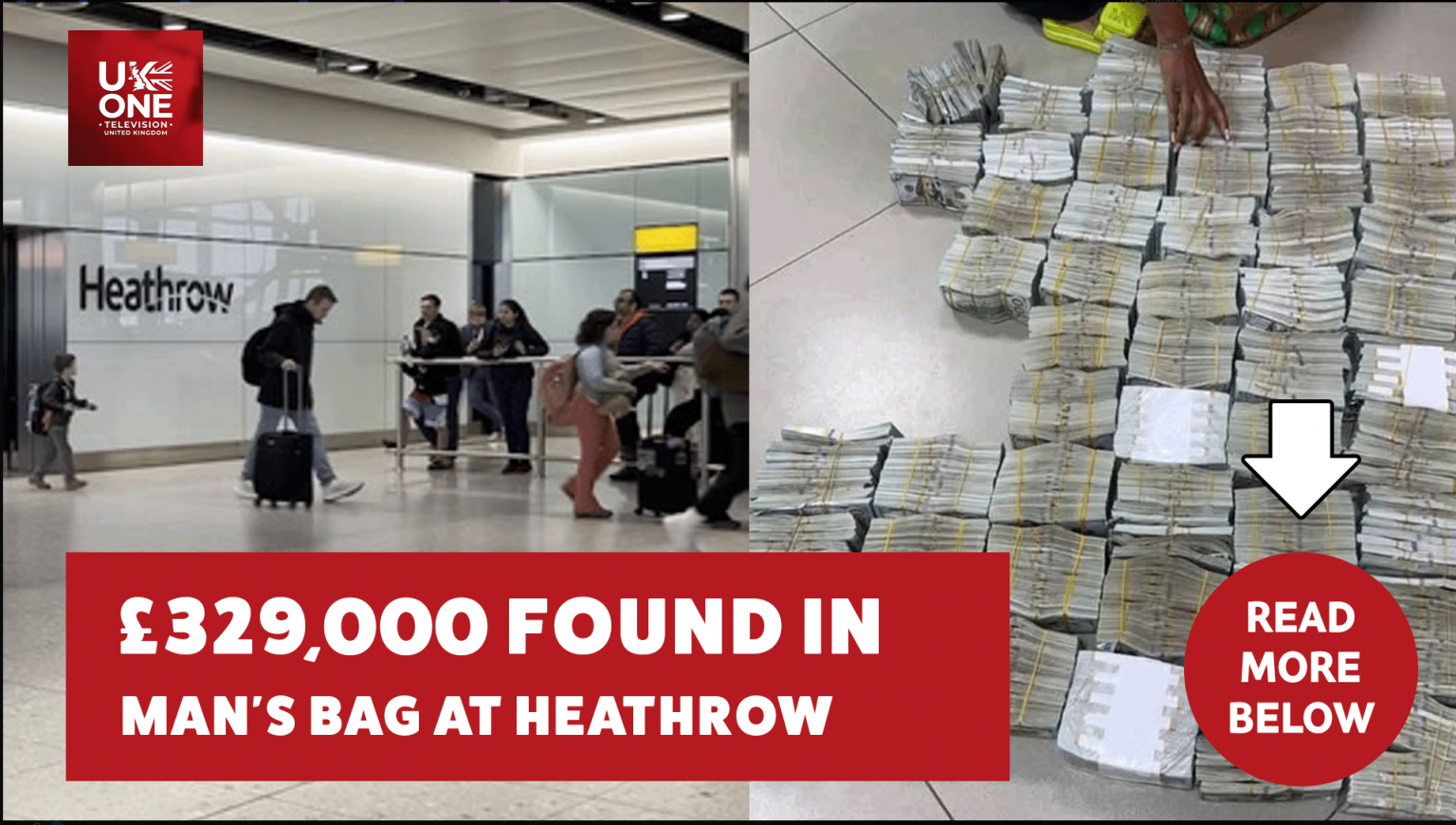
Authorities in Bosnia and Herzegovina have launched an investigation after police detained a man at an airport carrying a large amount of undeclared cash — approximately $329,000.
The incident, which quickly attracted public attention, once again highlighted growing concerns across Europe about cross-border cash movement, financial transparency, and the increasing scrutiny surrounding unexplained wealth.
Airport Check Turns Into Financial Investigation
According to preliminary reports, the man was stopped during a routine control procedure at the airport. Officers allegedly discovered several packages of cash hidden inside his luggage during inspection.
Witnesses described a tense scene as financial police and customs officials secured the area and began documenting the contents of the bags.
While carrying cash itself is not automatically illegal in many countries, European financial regulations require large amounts of money transported across borders to be officially declared.
Failure to do so can immediately trigger investigation procedures.
Why Authorities Focus on Cash Movement
In recent years, European law enforcement agencies have intensified monitoring of cash couriers traveling through airports and border crossings.
Financial investigators are often less interested in the cash alone and more focused on:
- The source of the funds
- The intended destination
- Whether taxes were declared
- Possible links to money laundering or underground financial networks
Authorities increasingly analyze travel patterns, transaction history, and communication records to understand whether the movement of money fits a legitimate financial narrative.
The “Money Trail” Matters More Than the Amount
Experts say modern financial investigations are no longer centered only on large sums.
Today, regulators focus heavily on the traceability of money.
A person transporting $329,000 legally may still face serious questions if:
- The source of income cannot be documented
- The money passed through multiple jurisdictions
- There are inconsistencies in declarations or ownership records
Across Europe, anti-money laundering systems are becoming increasingly sophisticated, combining customs checks with banking data, tax reporting, and international cooperation.
Europe’s Tightening Financial Controls
The case reflects a broader trend happening across the European Union and neighboring states.
Governments are strengthening controls related to:
- Cross-border cash transportation
- Beneficial ownership transparency
- Suspicious transaction reporting
- Informal money transfer systems
According to the European Commission, undeclared cash movement remains one of the key indicators used in financial crime investigations.
(ec.europa.eu)
The Financial Action Task Force (FATF) has also repeatedly warned that physical cash smuggling continues to play a major role in global money laundering networks.
(fatf-gafi.org)
Public Reactions and Speculation
As details spread online, the case quickly sparked speculation about how the man obtained such a large amount of money and why it was allegedly being transported physically instead of through banking channels.
Authorities, however, have not yet publicly confirmed:
- Whether criminal charges will follow
- The exact origin of the cash
- The intended destination of the funds
The investigation remains ongoing.
A Symbol of a Changing Financial Era
Cases like this reflect a larger shift happening in Europe’s financial environment.
Ten years ago, carrying large amounts of cash attracted attention mainly because of the amount itself. Today, the focus is increasingly on transparency, documentation, and whether the financial story behind the money can be verified.
In modern Europe, investigators are no longer simply counting cash.
They are tracing the path behind it.
Sources
- European Commission — Anti-Money Laundering Framework
https://finance.ec.europa.eu/financial-crime/eu-anti-money-laundering-and-countering-financing-terrorism_en - FATF Guidance on Cash Couriers
https://www.fatf-gafi.org/en/topics/methods-and-trends/cash-couriers.html - Europol Financial Crime Overview
https://www.europol.europa.eu/crime-areas-and-statistics/crime-areas/economic-crime